That extra button near your gear selector isn’t just for show. Tow/haul mode changes how your truck thinks about shifting, braking, and heat, and understanding it can save your transmission and your nerves on a long grade with a loaded trailer behind you.
- Tow/haul mode reworks shift timing to cut down on constant gear hunting under load
- It leans on engine braking to slow you on descents, sparing your friction brakes
- Brake controllers still need to be tuned to the actual weight you’re pulling
Why Your Truck Shifts Differently Under Load
A regular automatic transmission is tuned for an empty or lightly loaded truck. Add a heavy trailer or a bed full of gravel, and that same programming starts to struggle. The transmission grabs a higher gear to save fuel, feels the strain, drops back down, then climbs again. This back and forth is called gear hunting, and it does two bad things. It wears on the transmission, and it builds up heat.
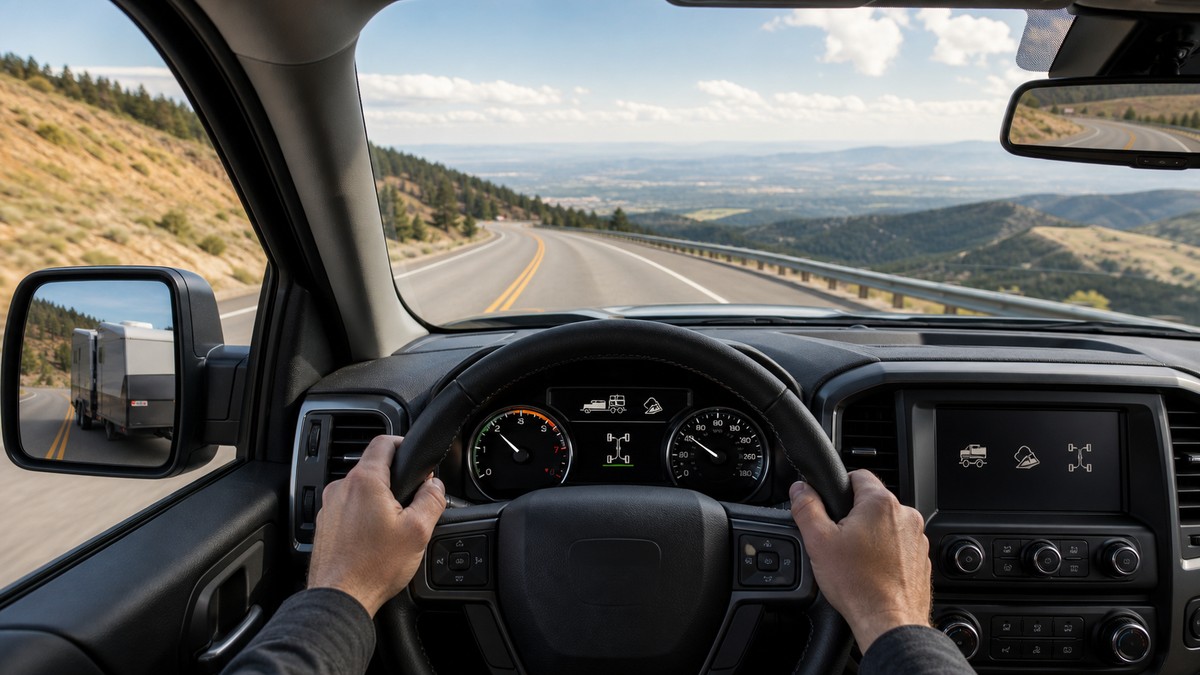
Flipping the tow/haul switch tells the truck to hold gears longer and shift at higher engine speeds. When you’re driving in hilly areas, towing a trailer, or carrying a heavy load and frequent shifting starts to happen, that single button push settles things down. Fewer shifts mean less friction inside the transmission, which lowers the risk of overheating or outright failure from all that excessive shifting. On many trucks a small indicator light comes on in the cluster so you know the mode is active.
Engine Braking and the Trip Back Down
Going up a hill loaded is only half the job. Coming back down is where a lot of drivers get in trouble. Ride the brakes the whole way and they heat up, fade, and lose their bite right when you need them most. Tow/haul mode helps here by using engine braking. Instead of coasting in a tall gear, the truck downshifts on the descent and lets engine compression do the slowing for you. That holds your speed on a grade and takes a big load off the friction brakes.
There’s a catch worth taking seriously. That added engine braking is great on dry pavement, but it can be dangerous on ice or snow. When the drive wheels suddenly slow on a slick surface, the back of the truck can step out and swing around, and a loaded trailer only makes that worse. Skip tow/haul mode in icy or slippery conditions. The safety payoff on a steep dry grade turns into a real hazard once traction disappears.
Where the Brake Controller Fits In
Tow/haul mode handles the truck. Your trailer’s brakes are a separate system, and that’s where a brake controller comes in. The controller sends power to the trailer’s electric brakes so the trailer helps stop itself instead of shoving the truck forward. The key point is that a controller has to be matched to the load. A setting that feels fine with an empty utility trailer will be far too weak under a fully loaded one, and a setting dialed in for maximum weight can lock up light trailer wheels. Take a minute to adjust the gain before every heavy trip, then test it at low speed in an empty lot.
How the Feature Varies From Truck to Truck
The basic idea is standard across the major truck brands, but the details differ. Some trucks put a dedicated button on the shifter, others tuck it into a drive-mode menu, and the label ranges from a simple tow/haul toggle to broader towing profiles that adjust throttle and steering feel too. A few heavy-duty models add a separate grade-braking or exhaust-brake function that works alongside tow/haul on diesel engines. One habit holds true almost everywhere. The mode usually resets to normal every time you start the engine, so if you want it on, you push the switch again at the start of each drive. Check your owner’s manual for how your specific truck behaves, since the finer points aren’t identical.
Get More Out of the Button You Already Have
Tow/haul mode is one of the most useful features on a modern pickup, and plenty of owners never touch it. Use it when you’re loaded and shifting a lot, lean on the engine braking down long grades, leave it off when the road turns slick, and always match your brake controller to the weight. Those habits can make towing feel calmer and reduce unnecessary strain on the truck.